Christel Maritz Blog

Holiday Depression

It’s the most wonderful time of the year… well, not for everyone, especially of you prone to have holiday depression.

While images of love and joy fill storefronts, TV screens and magazine pages, for many people, the reality of the holidays isn’t so cheerful. Between stressful end-of-year deadlines, family dysfunction and loss, poor eating and drinking habits, and increasingly cold and dark winter days, it’s easy for the holiday season to feel not-so-merry and bright.

Constant reminders of others’ happy seasons can additionally serve as a painful reminder of the happiness and love that’s lacking in our own lives, resulting into holiday depression. For this reason, the month of December can be a particularly difficult time of year for those dealing with family conflict, loss, break-ups, divorce, loneliness and mental health issues.

Feelings of depression and negative mood affect many people at the holidays, and not just those who have been diagnosed with clinical depression. While there hasn’t been data to suggest an actual rise in depression rates and suicides in December — research has found that depression and suicide actually peak in the Spring — some experts say that the holiday blues are a very real phenomenon. And of course, there’s plenty of anecdotal evidence to suggest that this is the case.

Here are some of the risk factors of holiday depression, and how you can avoid them.

Setting up unrealistic expectations.

Hoping for a picture-perfect White Christmas holiday is setting yourself up for not only disappointment, but potentially depression.

“People have this anticipation or fantasy of the holiday that you would see on TV,” psychiatrist Dr. Mark Sichel, author of Healing From Family Rifts, tells The Huffington Post, adding that his practice gets much busier after the holidays. “Actually, it’s never exactly as people anticipate and it’s often disappointing. There’s often strife within families that comes out at holiday times.”

Especially when it comes to family especially, it’s important to manage expectations during the holidays and not hope for things to be perfect. If holidays tend to be a time of conflict in your family, or you’ve recently experienced the loss of a loved one, putting pressure on your family to all get along or to be cheerful could lead to disappointment and additional anxiety.

Being mindful of what you do have to be thankful for — your sister who always makes family gatherings bearable, getting a week off of work, or just the promise of a fresh start with the beginning of the new year — can help combat feelings of deficiency and lack.

“Realize that the holidays do end — and take stock of what you can be grateful for,” says Sichel. “Having gratitude is probably the best antidote against depression.”

Trying to do too much.

At the holidays, the pressure of trying to do everything — plan the perfect holiday, make it home to see your family, say yes to every event, meet those year-end deadlines — can be enough to send anyone into a tail spin, and you ending with holiday depression. And if you’re prone to anxiety and depression, stress (and a lack of sleep) can take a significant toll on your mood.

A heightened pressure and fear of not getting everything done are some of the most common triggers for the holiday blues, according to Sichel.

“Being bogged down by perfectionism” can contribute to feeling down, says Sichel. “Many people feel they just can’t do the right thing, that family members are always disappointed in them.”

Comparing your insides to someone else’s outsides.

Both in real life and on social media, it can be difficult to avoid comparing yourself with others around Christmastime. If you have a less-than-perfect family, a past trauma from this time of year, or just a less-than-full holiday dance card, comparing your holiday experience with other peoples’ is a recipe for increased sadness and isolation.

And as Sichel points out, these comparisons tend to be skewed — and they tend to make us feel bad about ourselves.

“People’s basis for comparison is not based in reality, because most families have issues and most people do not have the perfect Christmas that they would like to have or that they’d remember from their childhood,” says Sichel.

Slacking on self-care.

For many people, December is the busiest time of the year. When work pressures pile up and the calendar gets full with social obligations, the routines that normally keep us healthy and happy — yoga class, morning runs, healthy home-cooked meals, a meditation practice — are usually the first thing to fall by the wayside.

In addition to increased stress, eating poorly and drinking excessively can also exacerbate issues like stress, anxiety and depression.

“Take care of yourself — don’t overeat and over-drink,” says Sichel. “Do your regular routines of exercise and whatever keeps you together during the year.”

Sichel emphasizes the importance of avoiding binge drinking. Alcohol is everywhere during the holidays, and if you’re struggling with feeling down, it may be wise to avoid drinking as much as possible — alcohol is known to worsen symptoms of anxiety and depression.

Experiencing symptoms of Seasonal Affective Disorder.

If you tend to start feeling down when winter approaches each year, and those negative feelings don’t go away after the holidays are over, you may have Seasonal Affective Disorder (SAD).

According to Sichel, many people who think they are suffering from a case of holiday blues may actually be suffering from SAD, a form of depression that’s brought on by the change of seasons. But SAD shouldn’t be dismissed as mere “winter blues” — talk to me if you’re experiencing symptoms of the disorder to find a treatment that works for you.

Source

http://www.huffingtonpost.co.za/entry/holiday-depression_n_6326906

Taking care of your aging parents at home?

Parents too old to care for themselves and need to move in with your family? A good first step–before a crisis arises–is to hold family meetings with your parent, spouse, children, siblings and other key people so everyone can share their views and help decide how best to proceed. And while this is often a first–and sometimes the best–solution, it’s one that needs careful thought and planning.

In this column and the next, we’ll explore the range of residential options for care giving. In column 1, we’ll look at options for someone with fewer care needs,  in column 2, we’ll explore options for those with more demanding health conditions or those with Alzheimer’s or another dementia. The most typical situation is one in which adult children are assisting aging parents, and that’s the example we’ll focus on here. But the information applies to anyone—spouse, grandparent, friend, aunt, sibling, even yourself—who may no longer be able to live independently.

Open discussions: The family meeting

Since finances play an important role in long-term care, an honest discussion about financial resources should be part of the meeting. Families are rich in historical experiences, and family dynamics (“Mom always liked you best…”) will come into play in your decision-making. If the meeting is likely to be difficult, an outside facilitator such as a social worker, religious leader, or geriatric care manager might be helpful. Expectations should be clear to everyone involved.


It’s important to have a serious conversation about finances and the levels of care required for any planned long term care living situation. Photo by Getty Images

Key consideration: What level of care is needed?

As your parent gets older, his or her care needs will change, and in most cases become more challenging. Consulting with a geriatric care manager or knowledgeable social worker may be helpful as you consider current and future needs. As time goes by, changes in your parent’s medical or cognitive condition may require a further change in living arrangements. Questions to think about:

  • Does your parent need assistance throughout the day? Who’s available to provide this?
  • Is your parent’s memory impaired?
  • Which activities of daily living (such as food preparation, bathing, toileting) can your parent can do independently?
  • If needed, what is your comfort level for providing personal care such as bathing?
  • Evaluate your own health, physical abilities, job and family demands to help decide if you are able to provide care for your parent.
  • What services, such as in-home care, adult day services and transportation, are available to your parent?
  • Can your parent get appropriate medical care in your community?
What are your options?

Moving your parent into your home is certainly one option, but you and your family might want to consider other living arrangements as well. The type of housing you choose will largely depend on four important factors:

  • Your parent’s care needs
  • Finances
  • The location of potential housing and proximity to family members, and
  • Services and support available in your parent’s or your community.

The following list outlines different types of living arrangements that may be appropriate for someone who doesn’t need extensive care or assistance. Every community offers different choices. Remember, Medicare does not usually cover long-term care expenses or services.

  • Living independently at home: Most people prefer to remain in their own homes, and sometimes that’s possible—with some help. Resources in the community such as meal delivery service, “friendly visitors,” housekeeping, home health aides, transportation, or other in-home assistance might provide enough support so your parent can remain at home, in familiar surroundings. The home must be safe, with good lighting, clear spaces to walk, no stairs. Tech innovations, such as automatic pill dispensers, movement monitors or webcams, can be useful.A move to a smaller apartment, condominium or one-story house in their community or yours might also be feasible, with help and check-ins from family. Sharing an apartment or house with a friend or relative could be another possibility.
  • A newer option, called Naturally Occurring Retirement Communities, NORCs or Villages, offers members—generally a group of older people who live in the same geographic area—services such as home repair, transportation and social/educational activities. There’s a fee to join and the organization is directed by volunteers and/or paid staff. This is a growing national movement, and for some people, it’s enough support to allow them to remain in their homes.
  • Retirement Community: Independent retirement communities usually offer individual apartments in a multi-unit setting, with group meals, transportation, housekeeping and organized social activities. Residents are free to come and go as they please, yet have the benefits of a larger group setting. Amenities and prices vary from place to place. Some offer access to a nurse or nurse practitioner. As care needs increase, additional services (e.g., help with laundry, bathing) often can be added for a fee. Visit several communities before making your decision.
  • Continuing Care Retirement Communities (CCRCs–sometimes called “Life Care”) offer independent, assisted and skilled nursing facilities all in one location. If a person’s health deteriorates, a disruptive move to a new community isn’t necessary. These communities generally require a substantial entrance fee, often paid for with the sale of a home.
When your parent moves in with you

If living with family is the best option for someone who needs care, there are several issues to consider before making the move.

Changes in family roles. You and your family may decide that the best place for your parent is in your home. While this can be a very rewarding experience on many levels, living with your parent may lead to some tension caused by a shift in family roles. A once-independent parent may become more dependent. You’ll probably have less time for your spouse and for yourself. You might have to adjust your work schedule, and your children may need to help with household responsibilities, including care of their grandparent. These role changes can be big adjustments for everyone.

Changes in your house. There must be enough space and a floor plan that is suitable for an older adult who might have mobility or vision problems. Some homes require special adaptations to make them safe. Home health agencies and/or Area Agencies on Aging may help you do a home assessment and recommend modifications (such as grab bars and ramps). Some families even build an addition to their home or lease an “accessory apartment” (or “accessory dwelling unit”)—a fully equipped modular unit that can be temporarily or permanently set up on your property.

Changes in lifestyle. You and your parent probably have different lifestyles. Sleeping cycles, food preferences, noise level, social calendars, interests, and activities may need adjustments in order to guarantee a happy transition. If care needs become heavy, try to arrange for some time off from caregiving duties (“respite”) and enlist the help of family members, friends, a paid aide or a home care agency.

Finances. You may become more involved in your parent’s personal finances, including paying bills and monitoring and managing accounts. To make financial issues more manageable:

  • Agree upon how much, if any, payment your parent will provide towards their living expenses. Will they pay for rent, food and other costs?
  • Openly discuss financial arrangements with siblings.
  • Consider preparing a formal legal document called a Personal Care Agreement describing any payment to you from your parent for accommodations or your caregiving services.
  • Be sure legal documents are in place, such as Durable Powers of Attorney and Advance Directives.
  • Evaluate whether you need to make adjustments to your current work schedule.
  • If you will reduce your work hours, determine the implications for your own financial picture, your job, health insurance, and Social Security and retirement benefits.
Managing a Move

Packing and moving out of a house is a significant chore for anybody, but for the older adult who has decades’ worth of memories and possessions, moving can be a major emotional challenge.

In some communities, there are specialized companies that will, for a fee, help organize a senior’s move to a new location and arrange to sell or give away unneeded furniture and possessions. They will also help pack and unpack. Even if outside services are used, however, in most families the adult children play key roles in this task. Beginning to “de-clutter” early helps.

Your parent will need time to adjust to his or her new living environment and role in your family. Open communication, patience and support will help make this transition as smooth as possible.

Source – http://www.pbs.org/newshour/updates/options-want-stay-home-age/

5 Ways to Live Well with Chronic Pain

How to Live WellNone of us ever set out to live a life with chronic pain and illness, but it happens. There comes that moment when you are sitting in yet another doctor’s office going over your symptoms for the third time that week, and the physician is simultaneously squinting his eyes, trying to make sense of your laundry list of complaints while scribbling something in your file — when you realize that your story might not ever have a Cinderella ending.

You panic. You may throw things (when you get home). Niagara Falls begins to erupt from your eyes. And then gradually, over time and much heartache, you embrace Plan B.

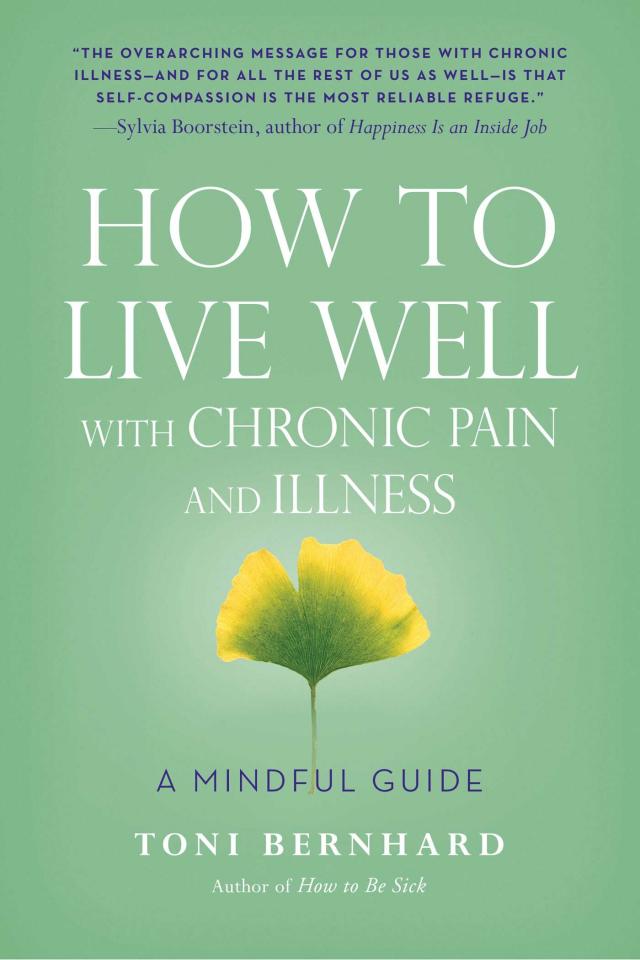
My Plan B was immersing myself into the wisdom of Toni Bernhard’s writing on the topic of chronic illness. In my opinion, there’s no one who understands the frustrations of being unfairly stymied in your life by an illness as well as Bernhard, but who offers a hopeful perspective without charging you with a bunch of actions that promises a “cure” like so many other self-help books do. Bernhard, a former law professor and dean of students at the University of California-Davis, caught a viral infection in May of 2001 on a trip to Paris and has been mostly housebound — often bedbound — since.

I read her first book, How To Be Sick, at a critical time in my recovery a year-and-a-half ago when I decided to start living around my symptoms instead of fighting against them on an hourly basis. Her insights have led me to peace, and helped me to embrace my illness in a way that has substantially reduced my suffering. Now, she has just published a new book, How to Live Well With Chronic Pain and Illness. Like her first book, it’s packed full of helpful advice, including skills to help with every day, how to communicate with family and friends, managing toxic thoughts and emotions, and dealing with isolation and loneliness.

Here are just a few favorite insights of mine that she offers in her book to help you live better with chronic pain and illness.

1. Be Kind to Yourself

One of my favorite chapters in Bernhard’s book is called “Letting Go: A Not-To-Do List for the Chronically Ill,” in which she compiles a fantastic list of eight things not to do:

  • Do not spend your precious energy worrying about how others view your medical condition.
  • Do not treat discouraging and disheartening thoughts or emotions as permanent fixtures in your mind.
  • Do not ignore your body’s pleas to say “no” to an activity.
  • Do not undertake a treatment just to please whoever is pressuring you to try it.
  • Do not be angry when people in your life don’t respond as you’d like.
  • Do not get hooked into believing you always have to “think positively.”
  • Do not put your pre-illness life on a pedestal.
  • Do not call yourself names or otherwise speak unkindly to yourself when you break one of your not-to-do rules.

They are all ways of learning how to be kind to yourself, which Bernhard would say is the most important lesson of all. “Self-compassion always comes first,” she writes. “If you think that treating yourself with compassion is too self-absorbed, remind yourself of the Buddha’s words: ‘If you search the whole world over, you will find no one who is dearer than yourself.’” We so often associate the word “kindness” with our actions to others, but it’s equally important to treat ourselves with respect and compassion.

2. Ask for Help

We’ve been taught that asking for help is a sign of weakness. In our culture, independence is valued over dependence. Learning how to ask for help takes practice for many of us. It’s a skill. Bernhard outlines some steps to hone this skill, and she reminds us that asking for help can actually be an act of kindness toward others. She writes, “Allowing them to help when you’re struggling with your health makes them feel LESS HELPLESS in the face of the new challenge in your life. It can mean a lot to someone to be able to aid a friend or family member who is struggling with his or her health.”

3. Learn How to Say “No”

This lesson has been one of the most difficult ones for me as a stage-four people-pleaser. Whenever I summoned up the courage to say “no” as a young girl, I endured silent treatments and other fun stuff. Going into my second decade with a chronic illness, however, I have no choice but to utter the two-letter word with regularity. That is, if I want to reduce my symptoms as much as possible. In responding to other people, Bernhard relies on Buddha’s teaching on skillful speech — we should speak only when what we have to say is true, kind, and helpful.

So when someone asks her to do something, she asks herself, “Would saying ‘no’ as opposed to ‘yes’ be true to myself? Would saying ‘no’ as opposed to ‘yes’ be kind and helpful to myself?” Think about this the next time you are asked to do something: Will your response be true to yourself, reflect your values, and EASE your suffering, as opposed to intensifying it? Or are you responding out of social pressure and a pattern of people-pleasing? Bernhard says it gets easier to say “no” as you begin to do it more often.

4. Don’t Feed the Want Monster

“Our desire to satisfy the Want Monster can feel so intense that we can talk ourselves into believing that getting what we want is necessary to our very ability to be happy,” writes Bernhard. For a long time, my deepest desire was to regain the good health that I enjoyed in my 20s. I could eat pizza and ice cream without suffering painful consequences. I enjoyed hosting parties with my husband. I didn’t have to keep a mood journal and assign each day a number between 0 (no death thoughts) and 5 (worrisome suicidal ideations), along with the day in my menstrual cycle, medications and supplements taken, and food and beverages consumed.

These two lines in Bernhard’s book enlightened me on how much energy I was wasting on trying to get back to my 27-year-old self: “The type of happiness that comes from satisfying the Want Monster is short-lived — because nothing is permanent … This conviction that the key to happiness is satisfying our desires sets us up for a big dose of disappointment and dissatisfaction with our lives.” After falling into that trap herself, she now realizes that the happiness that she wants comes from being content with her life as it is — and that is very attainable. She writes:

This happiness comes from making peace with the stark realities of life — that it’s a mixture of pleasant and unpleasant experiences, easy times and hard times, getting what I want and not getting what I want. It’s that way for everyone, and has always been. This happiness comes from opening my heart and mind to engage each day fully, even though I know it may be a day in which the Want Monster goes hungry.

5. Practice Mindfulness

Mindfulness is the practice of turning your attention with care to the experience of the moment,” Bernhard explains. Her chapters teach us how to apply mindfulness to our illness — that is, how to pay attention to our physical and mental discomfort in a way that brings us to peace with our lives as they are at the moment. This can be done inside or outside the practice of formal meditation. It is about responding skillfully to emotions that can hijack our mind and identifying stressful thought patterns that can so often trigger physical reactions in the body. With practice, we can learn to catch the stories we tell ourselves that work against our well-being and mindfully let them go. Bernhard writes:

It took several years of chronic illness for me to recognize that I was causing myself undue mental suffering by spinning stressful stories about my physical discomfort and then accepting them as true without question simply because I had thought them. Mindfulness practice was the principle too that helped me realize was I was doing.

Join the Living with Chronic Illness group on ProjectBeyondBlue.com, the new depression community.

Originally posted on Sanity Break at Everyday Health.
5 Ways to Live Well with Chronic Pain
Disorders
{$excerpt:n}

Mental Illness in Seniors

Bringing up the topic of senior care with a loved one can difficult, but the situation is even more fraught when that person suffers from a mental illness. Many family caregivers are left wondering how to approach the subject, worried about upsetting their elderly parent, or even fearful of an irrational or violent reaction.

Unfortunately, this is by no means an unusual situation. According to a report by the Institute of Medicine of the National Academies, between 14-20% of the nation’s senior population have one or more mental health issues, including bipolar disorders, depressive issues, dementia-related symptoms and substance abuse problems.

In combination with the natural physical and cognitive impairments that occur with aging, psychological issues can endanger a senior’s health and place stress on family members.

So how should caregivers bring up the need for senior care?

Mental Illness Treatment

Some people who need help do not seek treatment because they dismiss their mental changes as a natural part of aging, or they are ashamed of talking about it. While it is normal to experience some forgetfulness as we age, the American Psychiatric Association advises families to seek professional advice if an older adult shows obvious changes in behavior or mood.

One potential roadblock is that your loved one might be resistant to the idea of treatment. Heather Adams, psychology professor at University of Phoenix in Modesto, California, says:

“If the elderly parent is unwilling to acknowledge their disorder it may help to focus on symptoms rather than the disorder itself. This also works well for encouraging an elderly parent to schedule a doctor’s visit.” Then, if a diagnosis is reached, “medication can help to soften symptoms which could otherwise hinder lucid communication.” This can pave the way for a calm and effective conversation about senior care.

Professor Adams also strongly advises adult children of seniors with a mental illness to seek out resources and support for themselves. “Managing an elderly parent with a mental disorder is emotionally taxing,” she says. “Sometimes speaking with a therapist can help adult children create a plan for addressing issues with an elderly parent.” Also, support groups can help you connect with others in the same situation.

Having the Tough Conversation: Mental Illness in Seniors

If your parent’s mental illness is beyond your capacity to provide home care, then how should you let them know they need additional senior care? Here are some tips that can help you start a difficult discussion:

1. Make sure they are taking their medication.

“Facing a mental disorder can be very stressful for an elderly parent and so every effort to lower anxiety should be considered,” says Professor Adams.

2. Choose a time when both of you are calm.

According to the Mayo Clinic, “This will make it easier for you and your loved one to listen to each other and speak your minds.” Then, explain your needs, stress the benefits of care — and be prepared to compromise.

3. Take resistance in stride.

“When it occurs,” Professor Adams says, “shift the conversation to less inflammatory aspects of your concerns. Threats or emotional outbursts will only add anxiety and shut down communication. Remember not to take outbursts personally and know that they often stem from fear of the unknown.”

4. “If at first you don’t succeed, try again.”

Your loved one may not want to discuss the topic when you first bring it up, the Mayo Clinic advises trying again later. The same goes for conversations that go wrong. “If you feel yourself becoming emotional, the best advice is to take a break from the conversation and choose another time to discuss the topic,” says Professor Adams.

5. Get the paperwork you need to properly care for your loved one.

“In cases where an elderly parent is a danger to themselves or others, adult children may want to acquire a medical power of attorney for their elderly parent so they can make medical decisions on their behalf.”

Many specific disorders pose unique challenges. “For Anxiety (OCD) or Depressive (Depression, Bipolar Disorder) disorders, it is beneficial to delay discussion until the elderly parent has come out of an episode,” Professor Adams says. “Manic or depressive episodes create a difficult environment for discussing sensitive topics.”

The Importance of Treating Mental Illness in Seniors

Bringing up care for seniors with mental illness is a scary prospect, but the risks of leaving our loved ones without proper treatment are far more severe than any potential conversational blowups.

According to the Institute of Medicine report, untreated mental health conditions lead to poorer physical health outcomes, higher costs and longer hospital stays. Seniors with untreated depression, for example, are less likely to properly take medications for other problems like diabetes or hypertension.

To mom or dad, accepting care may seem like giving up their independence, but getting professional help may in fact increase their ability to live a normal life. Even if they do lose some independence, says the Mayo Clinic, “loss of independence isn’t a personal failing. Help your loved one to stay active, maintain relationships with caring friends and family and develop new physically appropriate interests.”

In the end, your ability to keep them involved in their own care decisions may help them feel more comfortable about taking a new step in the right direction.

Source – http://www.aplaceformom.com/blog/2013-4-12-seniors-with-bipolar-mental-illness/

RSS
Follow by Email
WhatsApp